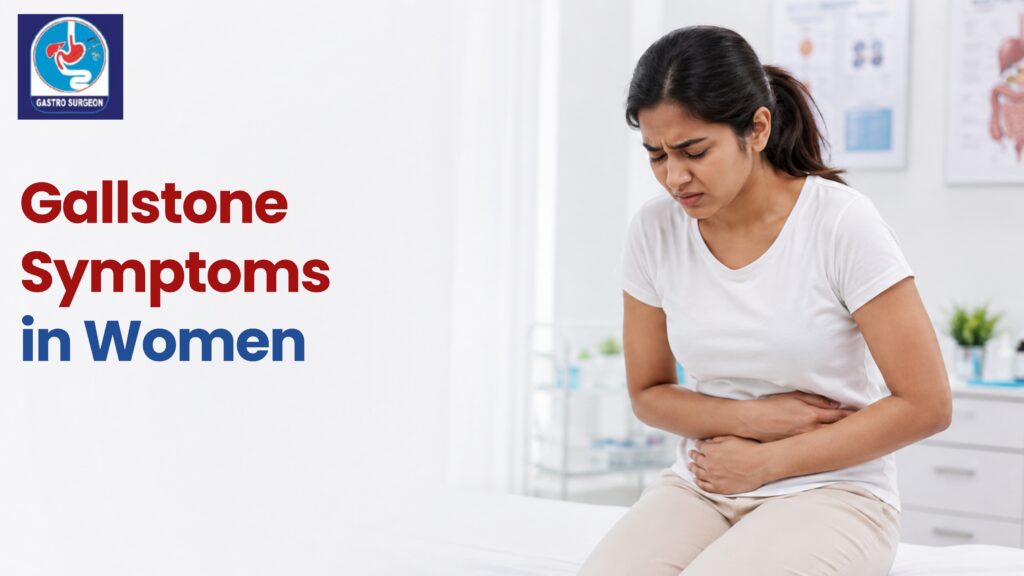
Gallstones are common digestive problems, but gallstone symptoms in women can sometimes be overlooked or mistaken for other conditions. A woman may experience upper abdominal discomfort, nausea, bloating, indigestion, or back pain without realizing that the gallbladder could be responsible.
This can make gallstone disease particularly frustrating. Symptoms may occur after meals, come and go, or resemble problems involving the stomach, liver, pancreas, or even the heart. In some cases, symptoms may be attributed to acidity or indigestion, delaying an accurate diagnosis.
Gallstones are hardened deposits that develop inside the gallbladder. Some people have gallstones without symptoms and never require treatment. Others develop biliary colic, inflammation of the gallbladder, bile duct obstruction, or pancreatitis.
Women have several recognized risk factors for gallstone disease, including pregnancy, hormonal influences, obesity, and rapid weight loss. However, having one or more risk factors doesn’t mean a woman will necessarily develop symptomatic gallstones.
Understanding the warning signs and knowing when to seek medical evaluation can help women receive appropriate treatment before complications develop.
What Are Gallstones?
The gallbladder is a small, pear-shaped organ located beneath the liver. It stores and concentrates bile, a digestive fluid produced by the liver.
Gallstones form when substances in bile become imbalanced and crystallize into solid particles. The two main types are cholesterol stones and pigment stones.
Gallstones can be as small as grains of sand or much larger. A person may have one stone or many stones.
Importantly, gallstones themselves don’t always cause symptoms. According to the National Institute of Diabetes and Digestive and Kidney Diseases, people with gallstones that do not cause symptoms often don’t need treatment.
Problems usually begin when a stone blocks the normal flow of bile.
Why Are Gallstone Symptoms in Women Sometimes Missed?
There isn’t necessarily one unique symptom pattern that occurs in every woman with gallstones. Instead, several factors can make diagnosis challenging.
Gallstone symptoms can resemble indigestion, gastritis, acid reflux, food intolerance, or other abdominal conditions. A woman may also experience symptoms in areas outside the abdomen, such as the back or right shoulder.
Another reason is that symptoms can be intermittent. A woman may experience severe pain for a few hours and then feel completely normal afterward.
Pregnancy can add another layer of complexity because nausea, vomiting, abdominal discomfort, and changes in digestion are already common during pregnancy.
The result is that gallbladder disease may not be considered immediately, particularly when the symptoms are mild or atypical.
What Do Gallstone Symptoms Feel Like in Women?
The classic symptom of symptomatic gallstones is an episode of pain known as biliary colic.
The pain often occurs in the upper right portion of the abdomen or the upper middle abdomen. It can sometimes spread to the back or right shoulder.
According to the NIDDK, gallstone attacks commonly cause pain in the upper right abdomen or upper middle abdomen and may last for several hours. They often occur after meals, particularly when the meal is heavy.
The discomfort can range from moderate to severe.
Some women describe it as a deep, steady pain rather than the burning sensation commonly associated with acid reflux.
Common Symptoms
Gallstone-related symptoms can include:
- Sudden or persistent upper abdominal pain
- Pain after eating
- Nausea or vomiting
- Pain spreading to the back or right shoulder
- Indigestion or abdominal discomfort
Bloating and gas may occur alongside gallstones, but these symptoms aren’t specific enough to confirm gallstone disease by themselves.
Gallstone Pain vs Acidity: How Can You Tell the Difference?
One of the most common sources of confusion is the similarity between gallstone pain and acid-related digestive symptoms.
Acid reflux commonly produces a burning sensation behind the breastbone, sour regurgitation, and symptoms that may worsen when lying down.
Gallstone pain is more often felt in the upper right or upper central abdomen and may be steady and intense.
However, symptoms can overlap, and self-diagnosis isn’t reliable.
If recurring “gas,” acidity, or indigestion is accompanied by significant upper abdominal pain, particularly after meals, medical evaluation may be appropriate.
Gallstones and Pregnancy
Pregnancy is an important consideration when discussing gallstone symptoms in women.
Hormonal changes during pregnancy can affect gallbladder function, while the growing uterus changes abdominal anatomy. Pregnancy can therefore increase the likelihood of gallstone formation and gallbladder-related symptoms.
At the same time, nausea and vomiting are common during pregnancy, which can make it difficult to identify gallbladder disease based on symptoms alone.
A pregnant woman experiencing severe or persistent abdominal pain, repeated vomiting, fever, or jaundice should seek medical assessment promptly.
Doctors can choose diagnostic tests and treatments that take pregnancy into account.
Risk Factors for Gallstones in Women
Women have several established risk factors for gallstone disease.
Pregnancy, obesity, rapid weight loss, and certain hormonal factors can increase the likelihood of gallstone formation.
Family history and increasing age may also contribute.
The traditional phrase “female, fertile, forty” is sometimes used as a memorable description of classic risk factors, but it is an oversimplification. Gallstones can occur in women of many ages, including younger women.
Rapid weight loss deserves particular attention. Losing weight very quickly can increase the concentration of cholesterol in bile and reduce gallbladder emptying.
Healthy, gradual weight management is generally preferable to extreme dieting.
How Are Gallstones Diagnosed in Women?
When gallstones are suspected, doctors typically begin with a medical history and physical examination.
The most commonly used imaging test is an abdominal ultrasound. It can usually detect gallstones and provide information about the gallbladder.
Blood tests may also be recommended when complications are suspected. These can help evaluate liver function, inflammation, or other abnormalities.
If doctors suspect that a stone has moved into the common bile duct, additional imaging may be necessary.
The exact diagnostic approach depends on the symptoms and clinical findings.
When Gallstone Symptoms Require Urgent Medical Attention
Not every gallstone attack is an emergency. However, certain symptoms can indicate a complication and should not be ignored.
Seek urgent medical care if you develop severe or persistent abdominal pain, fever or chills, repeated vomiting, yellowing of the skin or eyes, dark urine, or unusually pale stools.
These symptoms can occur with complications such as acute cholecystitis or bile duct obstruction.
According to the NIDDK, gallstone attacks and related symptoms require medical attention because untreated obstruction can lead to serious complications.
What Happens If Gallstones Are Left Untreated?
Asymptomatic gallstones often remain harmless. However, once gallstones begin causing symptoms, future attacks may occur.
A stone can block the cystic duct and cause acute cholecystitis, an inflammation of the gallbladder.
A stone entering the common bile duct can cause choledocholithiasis, potentially leading to jaundice or infection.
Gallstones can also block the pancreatic duct and contribute to gallstone pancreatitis, which can be a serious condition.
For this reason, recurring symptoms shouldn’t simply be dismissed as indigestion.
Treatment for Gallstones in Women
Treatment depends on whether the gallstones are causing symptoms or complications.
For people with asymptomatic gallstones, doctors may recommend observation rather than immediate surgery.
When gallstones cause repeated painful attacks or complications, laparoscopic cholecystectomy is commonly recommended.
During laparoscopic gallbladder removal, the surgeon uses several small incisions and specialized instruments to remove the gallbladder.
The body can continue to digest food without a gallbladder because bile produced by the liver can flow directly into the small intestine.
When Surgery May Be Recommended
Surgery may be considered when a patient has:
- Repeated symptomatic gallstone attacks
- Acute or chronic gallbladder inflammation
- Gallstone-related complications
- Certain bile duct problems
The final recommendation should be made after reviewing the patient’s symptoms, imaging, medical history, and overall health.
Can Gallstones Be Treated Without Surgery?
Some people wonder whether dietary changes or medications can eliminate gallstones permanently.
Dietary changes may help reduce symptoms in some patients, particularly by avoiding foods that trigger discomfort. However, changing the diet does not necessarily remove existing gallstones.
Certain medicines can dissolve specific cholesterol stones in carefully selected patients, but treatment can take a long time and stones may return.
For symptomatic gallstones, surgery is often the definitive treatment because it removes the gallbladder containing the stones.
How Women Can Reduce the Risk of Gallstone Problems
There is no guaranteed way to prevent gallstones, but healthy lifestyle habits may reduce risk.
Maintaining a healthy weight, exercising regularly, eating a balanced diet, and avoiding extreme crash diets are sensible measures.
A diet containing adequate fiber and healthy fats, combined with limited intake of highly processed foods, can support overall digestive health.
Women should also discuss significant or rapid weight-loss plans with a healthcare professional, particularly after bariatric surgery or during other periods of major dietary change.
Recognizing gallstone symptoms in women is important because gallbladder disease can sometimes resemble more familiar digestive problems such as acidity, indigestion, or bloating. Upper abdominal pain after meals, nausea, vomiting, and pain extending toward the back or right shoulder can be important clues.
Not every gallstone requires surgery. People with asymptomatic stones may often be monitored, while recurrent symptoms or complications may require treatment. Ultrasound is a key diagnostic tool, and a specialist can determine whether observation, medication, or laparoscopic gallbladder removal is appropriate.
Women shouldn’t ignore recurring abdominal pain simply because symptoms come and go. Early evaluation can help identify gallstones and prevent potentially serious complications such as gallbladder inflammation, bile duct obstruction, and pancreatitis.
For patients seeking specialist gastrointestinal and minimally invasive surgical care in Andhra Pradesh, Dr. Ramesh Baipalli is a surgical gastroenterologist associated with advanced laparoscopic and gastrointestinal procedures. He is an Outlook Best Doctor 2025 Honoree, has treated 25,000+ patients, and is recognized as a leader in surgical gastroenterology in Andhra Pradesh. His focus on advanced minimally invasive surgery and patient-centered care makes him a notable specialist for women seeking expert evaluation and treatment for gallstones, gallbladder disease, and other gastrointestinal conditions
FAQs
What are the most common gallstone symptoms in women?
The most typical symptom is pain in the upper right or upper middle abdomen, often after eating. Nausea, vomiting, and pain that spreads to the back or right shoulder may also occur.
Can gallstones cause bloating and gas?
They can occur alongside gallstones, but bloating and gas are not specific symptoms. Other digestive conditions can cause the same complaints.
Can gallstones be mistaken for acidity?
Yes. Upper abdominal discomfort and nausea can overlap with symptoms of acid-related disorders. Recurrent or severe symptoms should be evaluated rather than self-treated indefinitely.
Are gallstones more common in women?
Women have several recognized risk factors, including pregnancy and certain hormonal influences, that can increase the risk of gallstone formation.
Can gallstones disappear on their own?
Gallstones generally do not simply disappear. Some people never develop symptoms and don’t require treatment, while symptomatic disease may require medical or surgical management.